
Pilates Equipment Explained: From Reformers to Rings (and What You Can Use at Home for Free)

When most people think of Pilates, they picture mat exercises or those mysterious reformer beds found in studios. But here’s the good news: you don’t need expensive equipment to enjoy the benefits of Pilates at home. In fact, beginners can start with nothing but a mat, or even the living room floor.
This guide explains the key pieces of Pilates equipment you can try, from reformers and chairs to less expensive and more accessible circles and bands. I will also explain to you how to adapt them so you can practise Pilates from home for free if you’re just getting started.
The Pilates Reformer: Amazing but not Essential!
The Reformer has become extremely popular as of late! More and more people are trying reformer classes, and there are numerous studios opening all the time.
What it is: A moving carriage with springs, ropes, and pulleys.
Why it’s popular: A reformer machine adds resistance to many exercises but also assists in many exercises. It is great, as it supports rehab and deepens strength training at the same time.
What beginners need to know: Reformers are fantastic but also expensive and not necessary for results. With the right mat routine, you can get the same core benefits without spending so much money, or even a penny if you are willing to try Pilates at home.
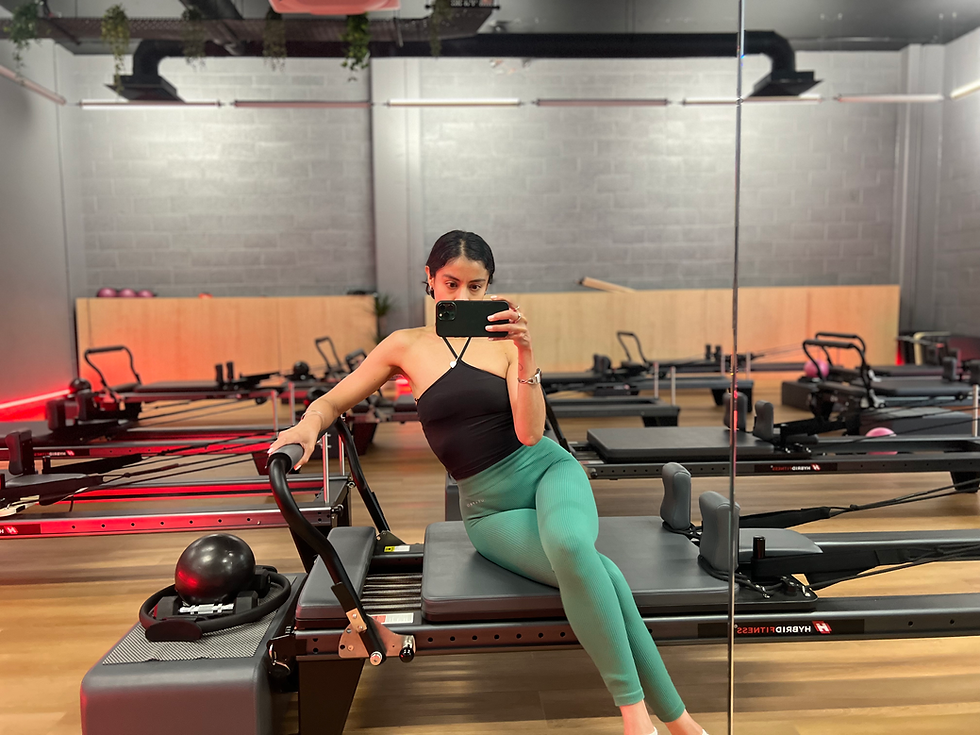
A Reformer Bed!
Other Large Equipment: Functional but Optional!
The Chair, Cadillac and ladder barrel are other traditional pieces of Pilates equipment, which are slightly less popular than the known and loved Reformer. These were invented by Joseph Pilates, as well to add resistance through the load of adding heavy springs, and also to add assistance and support to other exercises!
The Chair
What it is: A compact box with pedals and springs.
Why it’s used: Builds core strength, balance, and everyday movement support.
At home: Try simple bodyweight moves (like sit-to-stands or balance holds) to mimic chair benefits — no specialist equipment needed.
The Ladder Barrel
What it is: A curved barrel attached to a ladder-like frame. It’s designed to improve spinal mobility, flexibility, and core control. The shape supports the natural curve of your back, making it perfect for deep stretches and controlled strengthening work.
Why it’s used: The Ladder Barrel helps with posture correction, back extension, and core engagement. It’s especially effective for opening the chest, strengthening the lower back, and improving overall spinal alignment — a key goal in Pilates.
At home: You don’t need a Ladder Barrel to enjoy its benefits. Try these free Pilates alternatives:
Back extensions on the mat: Lie face down and gently lift your chest using your back muscles.
Bridge pose: Strengthens the glutes and lower back while improving hip mobility.
Chest opener over a rolled towel or cushion: Mimics the gentle arch of the barrel to stretch your spine.
The Cadillac
What it is: The Cadillac is one of the most versatile pieces of Pilates equipment. It looks like a raised table surrounded by a sturdy metal frame fitted with bars, straps, and springs. It was originally designed by Joseph Pilates to help bedridden patients build strength safely.
Why it’s used: The Cadillac supports a huge range of exercises — from gentle rehabilitation and stretching to advanced strength training. It’s especially great for improving posture, spinal mobility, and core stability, while offering extra support for those recovering from injury or working on precise alignment.
At home: You don’t need a Cadillac to enjoy similar benefits. Try these free at-home Pilates alternatives:
Wall roll-downs: Stand with your back against a wall and slowly roll down and up to mobilise the spine.
Leg lifts with a resistance band: Mimic spring-based work to strengthen your core and hips.
Gentle stretches using a door frame or towel: Great for building flexibility and body awareness, no specialist setup needed.
The Magic Circle (Pilates Ring): Affordable & Effective!
What it is: A small, flexible ring with padded handles.
Why it’s useful:Targets inner thighs and arms and adds resistance to mat workouts.
Beginner tip: While the ring is affordable, you can also substitute with a cushion or small ball at home. You can purchase a magic circle from Amazon for less than £20!
Here is a magic circle workout you can try at home, for FREE!
Small Equipment for Pilates From Home:
Here are some examples of inexpensive equipment you can try:Resistance bands, Pilates balls, foam rollers and light hand weights.
Why they help: Add variety and challenge without high cost.
Free option: Use a rolled-up towel for stretching, a cushion for support, or water bottles as light weights.
Try this workout using a Pilates ball and a resistance band! Simple and short but extremely effective!
Free Pilates from Home:No Equipment Required:
A beginner-friendly mat class is enough to get started with Pilates. You really do not need to dive straight into expensive equipment classes if you do not want to! Here are some examples of classes you can try:
Online classes are usually much cheaper than going to a studio
YouTube routines and workouts are completely free
Written guides and e-books can lead you through safe, effective moves and teach you the basics so that you know what you are doing and how to move effectively.
Focus on posture, breath, and consistency rather than the equipment you are using!
👉 Remember: The core principles of Pilates don’t depend on expensive reformers or studio gear. Pilates for beginners at home can be completely free and still transformative.
Conclusion
Pilates equipment; such as reformers and rings, can be exciting, but it’s not essential for results. If you’re new, start small: bodyweight, a mat, and a focus on mindful movement. You’ll quickly discover that free Pilates at home is just as powerful as studio practice, especially for beginners.
When you’re ready, adding small props like resistance bands or a Pilates ring can enhance your journey without breaking the bank.

How to Get Started Without Overthinking It!
If you’re curious where to begin, I’ve put together 5 free Pilates eBooks that each tell a different story, from recovering after injury to training through menopause, managing stress, cycle syncing, and even approaching weight loss in a sustainable way.
👉 Download them here: Free Pilates eBooks
And if you’d rather jump straight into moving, you’ll find free Pilates workouts for beginners on my YouTube channel.
Both options are designed to help you make Pilates fit into your life, not the other way around.
💬 Download your free Pilates guide!
Start Today! Get your FREE eBook and Pilates class now; you won't regret it. https://www.nataliapilates.co.uk/free-pilates
The goal isn’t perfection. It’s progress you can feel in your posture, your energy, and your ability to keep up with life.
Pilates breathing is more than a detail; it’s the foundation of every move. When you master it, you’ll notice stronger core control, smoother movements, and a calmer mind.
So next time you’re on the mat, don’t just think about the exercise. Think about the breath guiding it.

Have a look at some of the free Pilates workouts I offer here
Have an amazing week, and remember that just starting is key to feeling amazing both inside & out! 🤍✨


Comments